Introduction
In today's diverse classroom settings, educators face the challenge of supporting students with various learning needs. ADHD is one such condition that significantly impacts students' academic performance and social-emotional well-being. This case study outlines the development of an 8-hour continuing education course designed to equip educators with the knowledge and strategies to effectively support students with ADHD.
Client Background
The client, a leading provider of professional development courses for educators, identified a growing need within the education community for comprehensive training on understanding and supporting students with ADHD. Recognizing the importance of addressing this issue, they commissioned the creation of a specialized course targeting educators seeking continuing education credits.
Project Objectives
- Educate educators about the characteristics and challenges associated with ADHD in the classroom.
- Provide practical strategies and interventions to support students with ADHD in academic and social settings.
- Foster a supportive and inclusive learning environment that empowers educators to meet the diverse needs of all students.
Course Development
The 8-hour course was meticulously developed to encompass a wide range of topics relevant to educators:
- Needs Assessment: Conducted surveys and interviews with educators to identify common challenges and knowledge gaps related to supporting students with ADHD.
- Curriculum Design: Developed a comprehensive curriculum covering topics such as understanding ADHD, classroom accommodations, behavior management strategies, and collaboration with parents and professionals.
- Content Creation: Created engaging and interactive course materials, including presentations, case studies, role-playing exercises, and resource guides.
- Expert Input: Collaborated with ADHD specialists, psychologists, and experienced educators to ensure the accuracy and effectiveness of the course content.
- Pilot Testing: Conducted pilot sessions with a diverse group of educators to gather feedback and fine-tune the course content and delivery methods.
The video below is an interactive brain map made using Adobe Illustrator and Articulate Storyline.
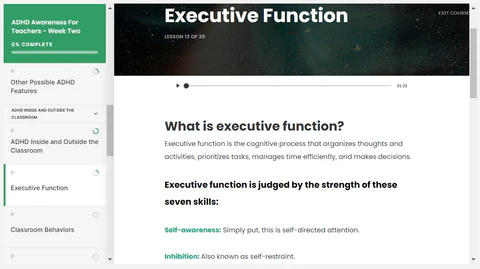
The course in Articulate Rise. Lesson 13 covers executive function and breaks down the seven core skills.
Course Implementation
The course was delivered through online modules to accommodate different learning preferences and schedules:
- Online Modules: Developed e-learning modules accessible through the organization's learning management system, providing participants with flexibility to complete coursework at their own pace.
- Case Studies and Role-Playing: Incorporated real-life case studies and role-playing exercises to simulate common classroom scenarios and enhance participants' problem-solving skills.
- Resource Sharing: Provided participants with access to tip sheets, checklists, and recommended reading materials to support ongoing learning.
- Assessment and Feedback: Conducted assessments and solicited feedback from participants to measure learning outcomes and course effectiveness.
Outcomes
- Enhanced Understanding: Participants gained a deeper understanding of ADHD and its impact on students' learning and behavior, leading to increased empathy and awareness among educators.
- Improved Strategies: Educators acquired practical strategies and interventions to effectively support students with ADHD, resulting in enhanced classroom management and student engagement.
- Collaborative Approach: The course fostered collaboration among educators, parents, and professionals in developing personalized support plans for students with ADHD.
- Continuing Education: Participants earned continuing education credits and received a certificate of completion.